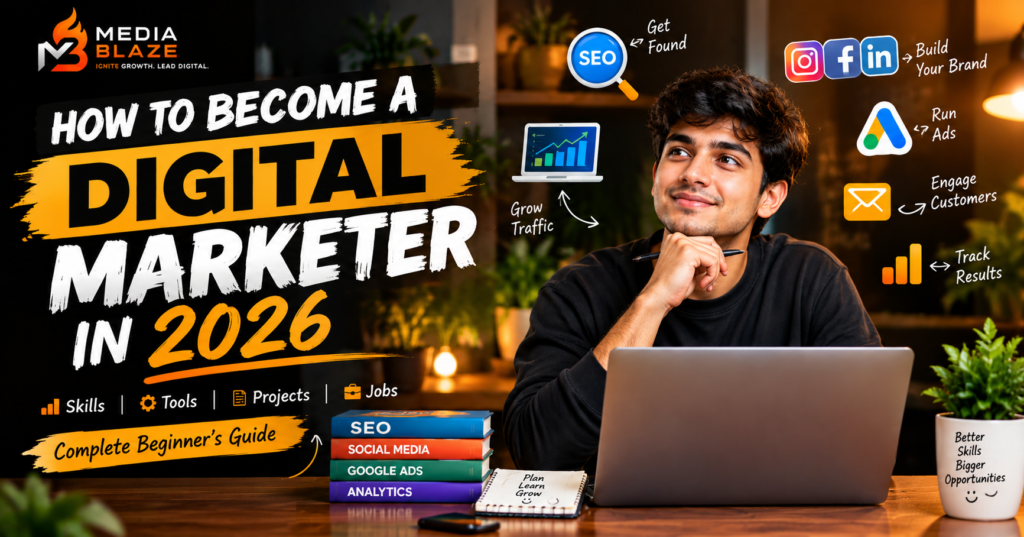
Have you ever wondered how to become a digital marketer but felt confused about where to start? You might have seen digital marketing job openings, watched tutorials online, or heard people talking about SEO, social media marketing, and Google Ads. With so many skills and tools to learn, getting started can feel overwhelming.
The good news is that you do not need to master every marketing skill before starting your career. You can begin with the fundamentals, choose one area that interests you, and gain practical experience through small projects.
In this guide, you will learn how to become a digital marketer in 2026, which skills to develop, which tools to explore, and how to build a portfolio that demonstrates your abilities. Whether you are a student, graduate, freelancer, or career changer, these practical steps will help you create a learning plan that suits your goals.
What Does a Digital Marketer Actually Do?
A digital marketer helps businesses reach their target audiences through online channels. The goal might be to increase website traffic, generate leads, improve brand awareness, encourage sales, or build stronger customer relationships.
The exact responsibilities depend on the company and the role. An e-commerce marketer may focus on advertising campaigns and sales data, while someone working at a digital marketing agency may handle SEO, content creation, and social media for several clients.
What Are the Main Responsibilities of a Digital Marketer?
A digital marketer’s responsibilities can include:
- Researching keywords and understanding search intent.
- Writing and optimizing website content.
- Managing social media accounts and campaigns.
- Creating and monitoring Google Ads or Meta Ads campaigns.
- Planning email marketing campaigns.
- Analyzing website traffic and user behaviour.
- Researching competitors and target audiences.
- Improving search engine visibility.
- Measuring campaign performance and conversions.
- Using AI tools to support research and repetitive tasks.
Not every digital marketer performs all these activities. Many professionals specialize in one area before expanding their skills.
What Skills Do Digital Marketers Need?
Learning how to become a digital marketer involves developing both technical and creative skills. Technical skills help you use marketing platforms and interpret data, while creative skills help you communicate ideas and understand customer needs.
Some useful skills include:
- Search engine optimization (SEO).
- Content writing and content marketing.
- Social media marketing.
- Paid advertising.
- Basic website management.
- Marketing analytics.
- Communication and problem-solving.
- Research and strategic thinking.
- AI-assisted content and marketing workflows.
You do not need to learn everything at once. Start with the skills that match your preferred career direction and gradually expand your knowledge.
How Is Digital Marketing Changing in 2026?
Digital marketing continues to evolve as search engines, social platforms, advertising systems, and AI tools develop. Marketers increasingly need to understand audience behaviour, create useful content, measure results, and adapt their strategies.
AI can help with brainstorming, research, content outlines, and data summaries. However, marketers still need to check accuracy, understand customer needs, protect brand quality, and make informed decisions.
Why Choose a Digital Marketing Career in 2026?
Businesses use online platforms to connect with potential customers, explain their products, build trust, and generate sales. A local business may depend on Google Search and Google Maps, while an online store may rely on social media, paid advertising, email, and organic search.
Digital marketing brings these activities together through measurable online campaigns.
Why Do Businesses Need Digital Marketing?
Imagine a customer looking for a restaurant, clothing store, consultant, or website development service. They might search online, compare websites, read reviews, and check social media before making a decision.
Businesses need a clear online presence to help potential customers discover and understand their offerings.
Digital marketers help businesses reach relevant audiences, create useful content, improve website visibility, and measure whether their campaigns are producing meaningful results.
How Is AI Changing Digital Marketing Careers?
AI tools can help marketers generate ideas, summarize research, draft content, organize information, and explore campaign variations. These capabilities can reduce time spent on certain repetitive tasks.
However, using AI effectively requires more than entering a prompt. A marketer must understand the target audience, select appropriate messages, verify information, and evaluate campaign performance.
For beginners, learning marketing fundamentals alongside AI-assisted workflows can provide a useful foundation for working with modern marketing tools.
Who Can Become a Digital Marketer?
Students, graduates, working professionals, freelancers, and people changing careers can all explore digital marketing.
A relevant degree may help with certain positions, but requirements vary by employer. Practical skills, communication, problem-solving, and evidence of completed projects can also be important.
For example, instead of simply claiming that you understand SEO, you could demonstrate keyword research, explain how you optimized a webpage, and show the changes you made.
A portfolio gives employers or potential clients something concrete to evaluate.
How to Become a Digital Marketer With No Experience
Starting without professional experience can feel challenging, particularly when job advertisements request previous work experience. One practical approach is to build your own projects while learning the fundamentals.
You do not need to wait for your first job to start developing useful skills.
Step 1: Learn the Basics of Digital Marketing
Begin by understanding the main areas of digital marketing:
- SEO.
- Content marketing.
- Social media marketing.
- Email marketing.
- Paid advertising.
- Web analytics.
Learn what each area does and how it supports a business objective.
For example, SEO helps businesses improve their visibility in organic search results. Paid advertising allows businesses to reach selected audiences through advertising platforms. Content marketing focuses on creating useful material that attracts and informs potential customers.
You can begin with free educational resources such as Google Skillshop and HubSpot Academy.
Choose one topic at a time, take notes, and practise what you learn instead of collecting certificates without applying the knowledge.
Step 2: Choose a Digital Marketing Skill to Focus On
One common beginner mistake is trying to learn every marketing skill simultaneously. You might start with SEO, switch to Google Ads, and then move to social media marketing without becoming confident in any of them.
Instead, choose one primary skill based on your interests.
If you choose SEO, learn keyword research, search intent, on-page optimization, internal linking, content structure, and basic analytics.
If you prefer paid advertising, begin with campaign objectives, audience targeting, budgeting, ad creative, and performance measurement.
Once you have developed a basic understanding of your first skill, you can explore related areas. This approach helps you build a stronger foundation while gradually expanding your capabilities.
Step 3: Build a Digital Marketing Project
Practical projects help turn theoretical knowledge into demonstrable experience. You could create a blog, build a basic website, manage a social media page, or help a local business improve its online presence.
Other useful project ideas include:
- Conducting an SEO audit.
- Researching keywords for a sample business.
- Optimizing an existing webpage.
- Preparing a sample advertising campaign.
- Creating a social media content calendar.
- Reviewing website traffic and user behaviour.
- Comparing the performance of different content formats.
Record what you did, why you did it, and what happened afterwards. If a campaign or webpage does not perform as expected, investigate possible reasons and identify improvements.
Your first project does not need impressive results. It needs to demonstrate your process, practical effort, and ability to learn from evidence.
Step 4: Learn Essential Digital Marketing Tools
Once you understand the basics, practise using tools relevant to your chosen skill.
Some examples include:
- Google Analytics for website and user activity analysis.
- Google Ads for paid search advertising.
- Meta Ads Manager for Facebook and Instagram advertising.
- Canva for creating marketing visuals.
- Semrush for SEO research and website analysis.
- Google Search Console for monitoring search performance.
Explore the official Google Analytics learning resources and Google Search Central SEO documentation.
You do not need to master every platform immediately. Start with the tools you need for your project, practise using their reports, and learn how to interpret the information they provide.
How to Learn Digital Marketing From Scratch
If you have no previous marketing experience, a simple learning roadmap can make the process more manageable. Focus on understanding concepts, practising skills, and reviewing your progress.
Create a Simple Digital Marketing Learning Roadmap
Here is an example of a 12-week learning plan for beginners.
Weeks 1–2: Learn the fundamentals. Understand SEO, content marketing, social media, paid advertising, and analytics.
Weeks 3–6: Focus on one skill. Practise keyword research, content optimization, social media planning, or another area that matches your interests.
Weeks 7–10: Work on a practical project. Apply your knowledge to a blog, website, sample campaign, or social media account.
Weeks 11–12: Review your work. Measure available results, identify problems, improve your project, and prepare a portfolio case study.
This schedule is flexible. You may need more time for certain topics, and that is completely normal. The objective is to create a consistent learning routine rather than rush through a checklist.
Practise Digital Marketing Instead of Only Watching Tutorials
Watching tutorials can help you understand concepts, but practical work shows you how to apply them.
For example, after learning keyword research, try finding relevant keywords for a website. After studying social media marketing, prepare a content calendar for a specific audience.
Review your work, identify mistakes, and try again. Consistent practice helps you become more comfortable with the tools and decisions involved in real marketing tasks.
Should You Take a Paid Digital Marketing Course?
A paid course can be useful if it offers structured lessons, practical assignments, feedback, or mentorship. However, paying for a course is not a requirement for every beginner.
Start with free resources and explore different marketing areas before committing to an expensive programme.
If you decide to purchase a course, check its syllabus, instructor experience, practical exercises, and relevance to your career goals.
Remember that a certificate alone does not demonstrate that you can plan a campaign or solve a marketing problem. Combine learning with hands-on projects.
How to Start a Career in Digital Marketing
After learning the fundamentals and completing a few practical projects, begin exploring internships, entry-level jobs, and freelance opportunities.
You do not have to know every marketing tool before applying. Focus on roles that match your current skills and continue learning as you gain experience.
How Can an Internship Help You Start a Digital Marketing Career?
An internship can introduce you to real marketing workflows, deadlines, reporting, teamwork, and client requirements.
Look for opportunities where you can participate in meaningful tasks, receive feedback, and learn how a marketing team plans and evaluates its work.
How to Get Your First Freelance Digital Marketing Project
Start with a manageable project that matches your abilities. You might offer a basic website review, keyword research, content planning, or social media assistance.
Clearly explain what you will deliver, agree on the scope of work, and avoid promising results you cannot guarantee.
You can also create sample projects to demonstrate your process before approaching potential clients.
How to Use LinkedIn to Build Your Digital Marketing Career
Use LinkedIn to document your learning, share completed projects, and connect with professionals in the industry.
For example, you could publish a short case study explaining how you researched keywords, optimized a webpage, or developed a content calendar.
Focus on showing your process and lessons learned rather than making unsupported claims about results.
How to Apply for Entry-Level Digital Marketing Jobs
Prepare a résumé that highlights relevant skills, projects, tools, coursework, and practical experience.
When applying, read the job description carefully and explain how your experience relates to the responsibilities listed. If you meet many of the requirements but lack some professional experience, you may still choose to apply.
Keep improving your portfolio and use feedback from interviews or applications to identify skills you need to develop further.
Why Should You Learn AI for Digital Marketing?
AI tools can support research, brainstorming, content planning, data summaries, and repetitive marketing tasks.
Learn how to give clear instructions, review generated information, protect confidential data, and edit the output for accuracy and brand consistency.
AI should support your judgement rather than replace it. Understanding marketing strategy and customer needs remains important when choosing how to use these tools.
What Has Changed in Digital Marketing in 2026?
The central purpose of marketing remains helping businesses understand customers and communicate the value of their products or services. What changes are the platforms, technologies, audience behaviours, and methods used to achieve those goals.
How AI Is Changing the Digital Marketing Workflow
AI tools can assist with content ideas, research, drafting, advertising variations, and repetitive administrative tasks.
However, generated content still needs human review. Check facts, consider the intended audience, maintain a consistent brand voice, and ensure the content provides genuine value.
For example, an AI tool may suggest several advertising headlines, but a marketer still needs to determine which message fits the campaign objective and target audience.
Learning to use these tools thoughtfully can help you develop a more flexible digital marketing workflow.
Why SEO Is More Than Adding Keywords
Keywords help you understand what people search for, but repeating a phrase throughout an article does not automatically make the content useful or improve its rankings.
Start by understanding search intent. Someone searching for how to become a digital marketer may want to know which skills to learn, whether a degree is necessary, how to gain experience, and how to find a first job.
A helpful article should answer these questions clearly, organize information with relevant headings, and provide practical guidance.
Use your focus keyphrase naturally in the title, introduction, relevant subheadings, and body content. Avoid forcing it into every paragraph.
For additional guidance, read Google’s SEO Starter Guide.
Why Short-Form Video Matters in Digital Marketing
Short-form video platforms such as Instagram Reels and YouTube Shorts provide ways to communicate ideas through concise visual content.
Marketers can benefit from understanding storytelling, opening hooks, captions, visual clarity, and audience engagement.
You do not need to become a professional video editor to begin learning digital marketing. However, understanding how people discover and consume video content can help you plan more relevant campaigns.
Common Digital Marketing Mistakes Beginners Should Avoid
Learning digital marketing involves experimentation, feedback, and continuous improvement. Recognizing common mistakes early can help you use your time more effectively.
Trying to Learn Every Digital Marketing Skill at Once
You do not need to master SEO, paid advertising, email marketing, social media, graphic design, video editing, and analytics simultaneously.
Choose one area, develop a basic level of confidence, and then expand into related skills.
Collecting Certificates Instead of Building Experience
Certificates can demonstrate that you have completed training, but they do not automatically prove that you can manage a marketing task.
Apply what you learn through projects and document your process. A well-explained project can help an employer or client understand how you approach problems.
Ignoring Digital Marketing Analytics
Marketing performance cannot be evaluated through creativity alone. Depending on your objective, useful metrics may include website traffic, clicks, engagement, leads, conversions, and advertising costs.
Learn which metrics matter for your campaign and how to interpret them. Avoid judging performance using numbers that do not relate to your actual objective.
Waiting Too Long to Build a Digital Marketing Portfolio
You can begin building a portfolio before you get your first job. Include personal projects, sample campaigns, website improvements, content plans, or SEO audits.
Clearly label practice projects and distinguish them from work completed for actual clients. Explain the problem, your approach, the work you completed, and any results you can verify.
Comparing Yourself With Experienced Digital Marketers
Someone with several years of experience will naturally have encountered more campaigns and challenges than a beginner.
Instead of comparing your progress with theirs, set realistic learning goals. Track the skills you have developed, review your projects, and identify what you want to improve next.
Frequently Asked Questions About Becoming a Digital Marketer
How Can I Become a Digital Marketer Without a Degree?
Some digital marketing roles accept candidates without a marketing degree, although requirements vary by employer. You can learn through online resources, practical projects, internships, and relevant courses.
Build a portfolio that demonstrates your skills and explains how you approached specific marketing tasks.
How Long Does It Take to Learn Digital Marketing From Scratch?
The time required depends on your starting knowledge, learning schedule, chosen specialization, and amount of practical experience.
You may understand the fundamentals within a few months, but developing stronger skills requires ongoing practice. Focus on steady improvement instead of expecting to master every area in a few weeks.
Which Digital Marketing Skill Should I Learn First?
SEO and content marketing can help you understand search behaviour, useful content, and organic traffic. Paid advertising may appeal to people who enjoy campaign testing and performance data, while social media marketing may suit those interested in communication and creative content.
Choose a starting point that matches your interests and career goals.
Is Digital Marketing Still a Career Option in 2026?
Digital marketing continues to involve a range of activities, including SEO, content, paid advertising, social media, analytics, and customer communication. Tools and workflows evolve, so professionals need to keep learning.
Develop practical skills, understand your audience, and learn how to evaluate marketing results rather than relying only on individual tools.
Do I Need to Pay for a Digital Marketing Course to Get a Job?
No, a paid course is not essential for every role. You can begin with free educational resources, practise your skills, and build relevant projects.
A paid programme may provide structure or feedback, but practical experience and the ability to demonstrate your knowledge remain important.
Final Thoughts on How to Become a Digital Marketer in 2026
Learning how to become a digital marketer does not require you to master every platform before you begin. Start with the fundamentals, choose one skill, and practise it through a real or sample project.
Use free learning resources, become familiar with relevant tools, and document your work in a portfolio. As your confidence grows, explore internships, entry-level jobs, or freelance projects that match your abilities.
Your first project may not produce the results you expected. Treat that experience as an opportunity to investigate, improve your approach, and try again.
Focus on understanding customer needs, creating useful marketing solutions, measuring performance, and learning from the results. Combine these fundamentals with thoughtful use of modern tools, including AI, and keep improving your skills over time.
Start small, practise consistently, and take the next step when you are ready.